To make coffee while camping, heat water on a stove until it is just off the boil, then brew with a pour-over cone, French press, percolator, the cowboy method or instant. Use roughly 1 part coffee to 13 to 16 parts water, match your grind to the method, and pack out your grounds.
Pick a method for your trip
There is no single best way to make camp coffee. The right method depends on how far you are carrying it, how many people you are feeding and how much cleanup you want to deal with before breakfast.
| Method | Best for | Weight | Cleanup |
|---|---|---|---|
| Pour-over | One or two people who want a clean cup | Very light | Easy, pack out the filter |
| French press | Car camping, small groups, rich coffee | Medium | Messiest, wet grounds to deal with |
| Percolator | Big groups, campfire or stove | Heavy | Moderate |
| Cowboy coffee | Minimal gear, a pot and nothing else | Lightest | Grounds in the pot |
| Instant | Backpacking, fast starts, cold mornings | Almost nothing | Nothing but a wrapper |
If you are car camping at a site in the Red River Gorge or a cabin in the Smokies, bring the French press or the percolator. If you are carrying everything on your back, pour-over or instant wins.
The basics: water, ratio, grind and heat
Every method on this list uses the same four ingredients. Get these right and camp coffee is as good as kitchen coffee.
Water
Start with clean water. If you are drawing from a creek, treat it the same way you would treat drinking water before it goes in the pot. Boiling handles a lot, but it does not remove grit or the taste of a muddy stream, so let it settle or filter it first.
Temperature
The National Coffee Association’s brewing guides put the ideal water temperature at 93 degrees Celsius, give or take 3 degrees. That is roughly 195 to 205 degrees Fahrenheit, which is just below a full boil. You do not need a thermometer. Bring the water to a boil, take it off the heat and let it sit for a moment before you pour. Water also boils at a lower temperature as you go up in elevation, so on a high ridge you may not need to wait at all.
Ratio
The same guides suggest about 1 gram of coffee to 13 to 16 grams of water for pour-over, and 1 to 10 up to 1 to 16 for French press. You probably do not have a scale in camp. A simple rule that gets you close: about two level tablespoons of ground coffee for each 8 ounce cup, then adjust to taste on day two.
Grind
The longer the coffee sits in the water, the coarser the grind should be. Pour-over takes a medium grind. French press and cowboy coffee want coarse, like rough sand. Percolators also do best with coarse. If you are buying pre-ground coffee for a trip, tell the shop which method you plan to use.
How to make pour-over coffee at camp
- Set a lightweight pour-over cone on your mug and drop in a paper filter.
- Add medium-ground coffee.
- Pour just enough hot water to wet the grounds and wait about 30 seconds while they bloom and bubble.
- Slowly pour the rest of the water in circles. Total contact time should land between 2 and 4 minutes.
- Lift off the cone, fold the filter around the grounds and put it in your trash bag.
Pour-over makes a clean cup with almost no sludge, and the cleanup is a single folded filter. That is why it is the backpacker’s favorite real coffee.
How to make French press coffee camping
- Add coarse grounds to the press.
- Pour in hot water, stir gently and put the lid on with the plunger pulled up.
- Steep for about 4 minutes.
- Press the plunger down slowly and pour right away. Coffee left in the press keeps brewing and turns bitter.
Camping presses come in plastic and insulated steel versions that are tougher than a glass kitchen press. The downside is cleanup: you will have a slug of wet grounds at the bottom. More on what to do with those below.
How to use a percolator
A percolator is the old-school campfire pot with a glass knob on the lid. Water goes in the bottom, coarse coffee goes in the basket at the top of the stem, and as the water heats it bubbles up the stem and through the grounds over and over.
- Fill the pot with water to just below the basket.
- Add coarse coffee to the basket and put the lid on.
- Heat over a stove or a grate above the coals until you see coffee bubbling into the knob.
- Turn the heat down so it perks gently rather than at a hard boil, and watch the color.
- When it looks as strong as you like, take it off the heat. Start checking after a few minutes, since a percolator left too long gets bitter fast.
Percolators are heavy, but they make a lot of coffee at once. For a group at a campsite with a picnic table, that matters more than weight.
How to make cowboy coffee
Cowboy coffee needs a pot, water, coffee and patience. That is all.
- Bring water to a boil, then take it off the heat.
- Stir in coarse grounds.
- Let it steep for about 4 minutes.
- Splash in a little cold water. Many campers swear it helps the grounds sink to the bottom.
- Pour slowly so the grounds stay in the pot. Leave the last bit.
Expect a few grounds in your cup. That is part of the deal.
Instant coffee, no shame
Instant coffee has come a long way. It weighs almost nothing, it works in cold water in a pinch, and there are no grounds to deal with. Stir a packet into hot water and you are done. On a cold morning when your hands do not want to work, instant is the smartest coffee in camp.
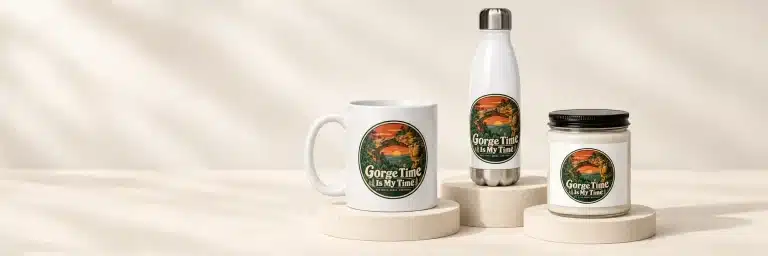
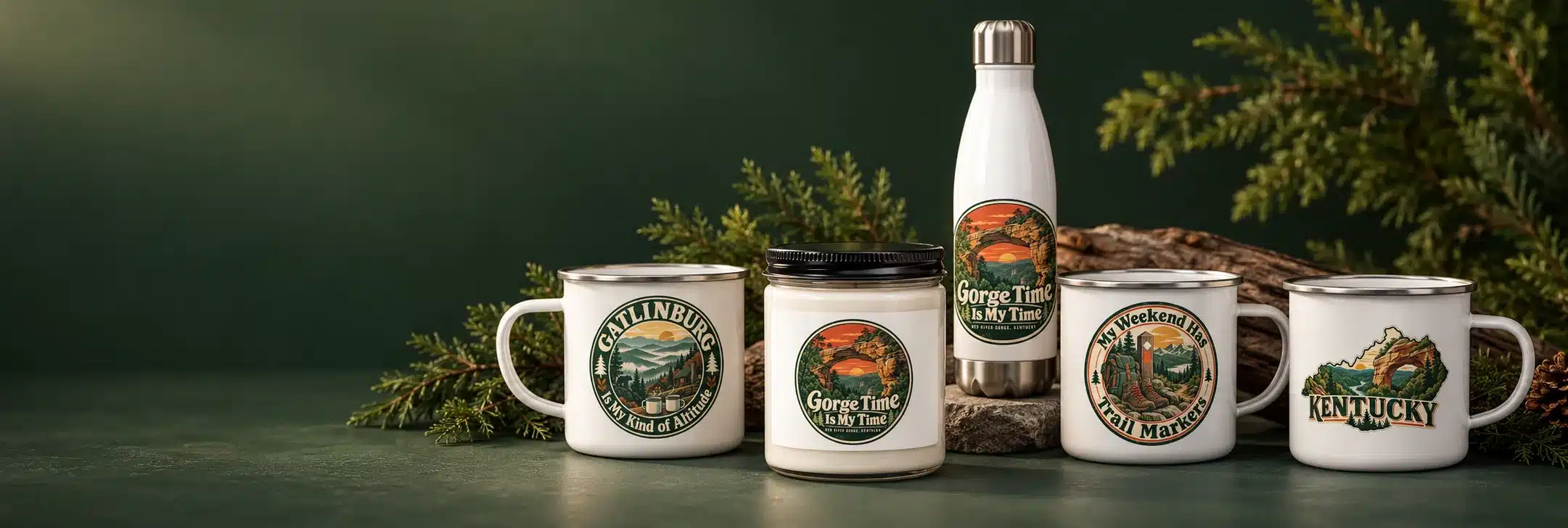
Whatever you brew, it tastes better out of a mug with a story on it:
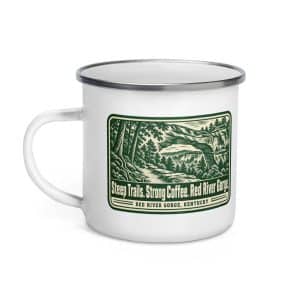 Red River Gorge Enamel Camp Mug: Steep Trails. Strong Coffee. Red River Gorge, Forest Ink Stamp$32.95See it →
 Nature and Adventure Vinyl Sticker: My Kind of Nightlife Has a Campfire, Scenic Shield Badge Price range: $14.95 through $22.95See it →
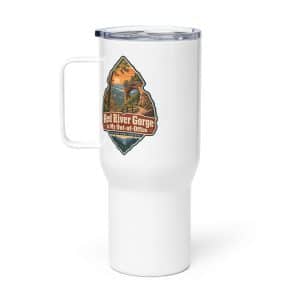 Red River Gorge Travel Mug: Red River Gorge Is My Out-of-Office, Scenic Shield Badge$35.95See it →
“Steep Trails. Strong Coffee. Red River Gorge” is our enamel camp mug for exactly this job. The “My Kind of Nightlife Has a Campfire” sticker goes on the cooler. “Red River Gorge Is My Out-of-Office” on a travel mug keeps the second cup warm while you break camp.
Cleanup and Leave No Trace
Coffee grounds feel natural, so a lot of people dump them in the woods or the fire ring. The Leave No Trace Center’s guidance on disposing of waste points the other way. Here is how to handle camp coffee cleanup the right way.
- Pack out the grounds. Leave No Trace says to pack out all trash, leftover food and litter. Treat grounds and filters as food waste. A zip-top bag for used grounds and filters takes care of it.
- Do not burn your trash. Leave No Trace says burning trash is never recommended, and that half-burned or buried garbage still attracts animals. That includes paper filters stuffed in the fire ring.
- Wash away from water. Carry water at least 200 feet from streams or lakes to wash your pot and mug. Use hot water and elbow grease first, and only a small amount of biodegradable soap if you need it.
- Strain, then scatter. Pour dirty rinse water through a fine mesh strainer, then scatter it broadly, well away from camp, especially in bear country. Pack out whatever the strainer catches.
- At a developed campground, ask the host where they want wastewater to go. Leave No Trace notes that food scraps and odors can build up where people dump water.
- Prefer a stove to a fire. Leave No Trace recommends a lightweight stove for cooking. If you do use a fire, use an existing fire ring where fires are allowed, keep it small and put it out completely with water, not dirt.
In bear country, treat coffee like food. Store it, and your used grounds, wherever you store the rest of your food. Bears do not care that it is decaf.
A simple camp coffee kit
- Stove, fuel and a lighter, plus a backup lighter
- A pot or kettle with a lid
- Your brewer of choice and filters if it uses them
- Coffee, pre-ground for your method, in an airtight bag
- A sturdy mug for each person
- A zip-top bag for used grounds and filters
- A small fine mesh strainer for rinse water
- A spoon, and sugar or creamer packets if you take them
For everything else, our Red River Gorge packing list covers the rest of the trip, and if you are shopping for the coffee lover in your hiking group, see our gifts for hikers.
Questions people ask
Can you bury coffee grounds when camping?
The better practice is to pack them out. Leave No Trace advises packing out all leftover food and trash, and notes that buried garbage can still attract animals. A zip-top bag makes it easy.
Can I throw coffee grounds in the campfire?
It is better not to. Leave No Trace says burning trash is never recommended, and half-burned food waste attracts wildlife. Bag the grounds and carry them out with your trash.
How much coffee do you use per cup when camping?
About two level tablespoons of ground coffee per 8 ounce cup is a good starting point. The National Coffee Association’s guides use 1 part coffee to 13 to 16 parts water by weight for pour-over.
What is the easiest way to make coffee while camping?
Instant coffee is the easiest: hot water, a packet and a spoon. If you want brewed coffee with little gear, a pour-over cone with paper filters is the next simplest.
How do you make coffee camping without a stove?
Where fires are allowed, you can heat water in a pot on a grate over an existing fire ring and make cowboy coffee or use a percolator. Check fire rules first, as they change with conditions. Cold-brew made the night before is another option with no heat at all.
How do you keep grounds out of cowboy coffee?
Let it steep, add a splash of cold water to help the grounds settle, then pour slowly and leave the last bit in the pot.
More in Red River Gorge and the full Nature & Adventure collection.