For a Gatlinburg cabin trip, pack layers instead of one big coat, rain gear, real walking shoes, a printed park parking tag, a headlamp, a paper map and your own coffee setup. Here’s the full checklist and the reasons behind it.
A cabin trip is easy to underpack for because it feels like a hotel stay with a better porch. But the cabin is usually up a steep road, the closest store may be a long drive down the mountain, and the weather on the ridges can be very different from the weather in town. This list is built around those facts.
First, how Smoky Mountain weather actually behaves
Most packing mistakes come from checking one forecast and trusting it. The park’s weather page explains the problem: elevations in the Smokies run from about 875 feet to 6,643 feet, and temperatures can vary 10 to 20 degrees Fahrenheit from the base of a mountain to the top. Clear skies down low don’t mean clear skies up high.
The season matters too. Here’s what the park describes:
- Spring (March to May): Unpredictable. Sunny skies can turn into snow flurries within hours, and snow can fall at higher elevations through March.
- Summer (June to August): Heat, haze and humidity, with common afternoon thunderstorms. Lower elevations reach the 90s in July and August.
- Fall (September to mid-November): Warm days and cool nights. Highs in the 70s and 80s in September fall to the 50s and 60s by early November. First frosts often come in late September, and snow is possible up high by November. This is also the driest stretch of the year.
- Winter (mid-November to February): Generally moderate, but it can be warm in the valleys while it snows on the peaks.
So the rule for any season is layers. You’ll want a light layer for an afternoon in town and a warm one for sunrise on the porch or a stop at an overlook.

Clothes
- Base layers or long-sleeve tees you can wear on their own or layer up
- A fleece or warm mid layer
- A real rain jacket. An umbrella won’t help on a trail
- A warm hat and light gloves for fall, winter and early spring, or for any trip up to Kuwohi
- Hiking shoes or boots with good grip. The park says improper footwear is one of the leading causes of injuries there, and fallen leaves make autumn trails slick
- A second pair of shoes, so you aren’t wearing wet ones the next day
- Comfortable cabin clothes and thick socks, since cabin floors are cold first thing in the morning
- A swimsuit if your cabin has a hot tub
For the park
A printed parking tag
This is the item people forget most often. There is no entrance fee for Great Smoky Mountains National Park, but you need a parking tag to park anywhere in the park for more than 15 minutes. According to the park’s fees page, tags are $5 daily, $15 weekly or $40 annual. Each tag is good for one vehicle, must show that vehicle’s plate number, and has to be a physical tag. The park doesn’t accept digital copies. Most trailheads have no tag machines, so buy online and print before you leave, or stop at the Gatlinburg Welcome Center or Sugarlands Visitor Center. For a cabin week, the weekly tag usually makes the most sense.
Your day pack
The park recommends carrying the ten essentials on every hike, even a short one:
- Navigation: a paper trail map as well as your phone
- Sun protection
- Insulation and rain gear
- A headlamp or flashlight. The park points out that your phone doesn’t count
- A first-aid kit
- Fire starter
- A small repair kit or knife
- Snacks that don’t need cooking
- Water. The park suggests at least 1 liter for every 2 hours of hiking
- An emergency shelter, even if it’s only a space blanket
Cell service in the park is described as extremely limited, so download maps before you go. Tell someone at the cabin where you’re hiking and when you expect to be back. Our easy Smoky Mountain hikes guide has trail ideas sized for a cabin day.
Binoculars
Wildlife viewing is a big part of a Smokies trip, and the park asks you to keep at least 50 yards from bears and 25 yards from elk. Binoculars let you watch without getting closer.
Kitchen and coffee
Cabins are stocked differently, so read your rental listing carefully. Don’t assume anything beyond basic cookware. Bring:
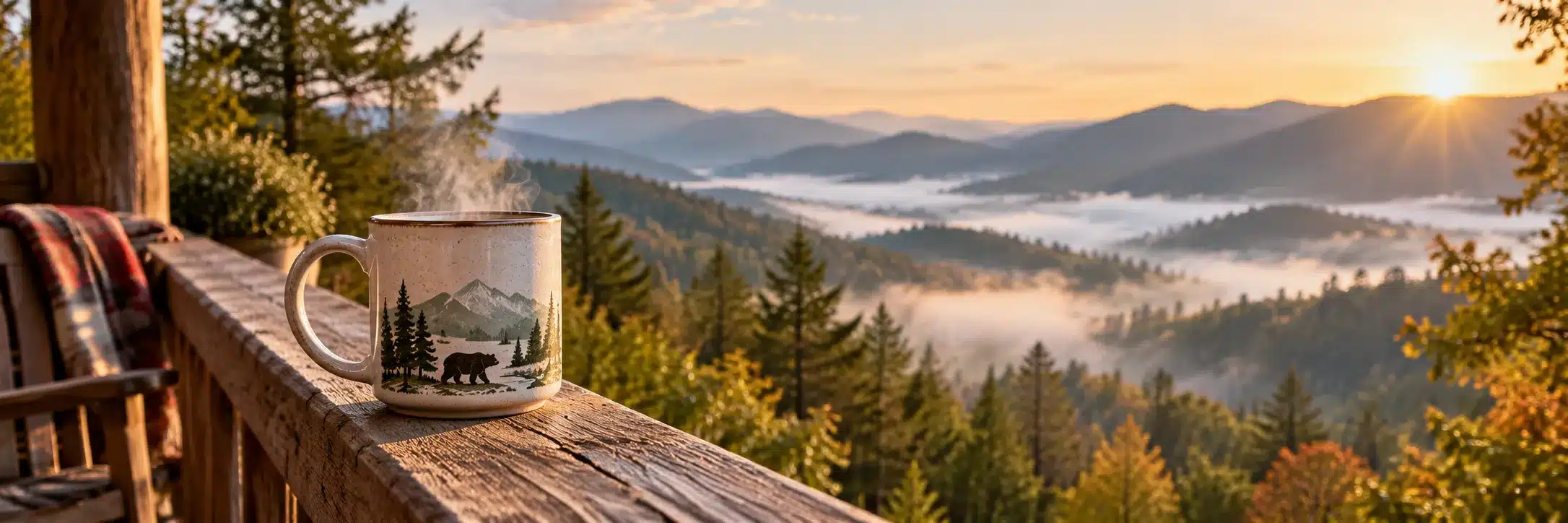
- Your coffee setup. A pour-over cone or French press plus filters gets around a strange coffee maker, and your own ground coffee saves a trip down the mountain on the first morning
- Mugs you actually like. The cabin’s mugs are usually whatever was on sale
- Groceries for the first night and the first breakfast, so you aren’t shopping late on arrival day
- Zip-top bags, foil and a few dish towels
- A sharp knife if you cook seriously, because rental knives rarely are
- Reusable water bottles for the car and the trail
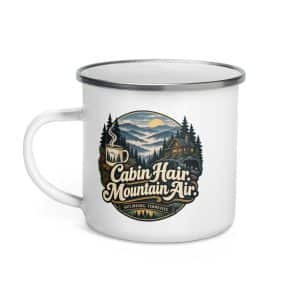 Gatlinburg and the Smokies Enamel Camp Mug: Cabin Hair. Mountain Air, Woodland Scenic Lettering$32.95See it →
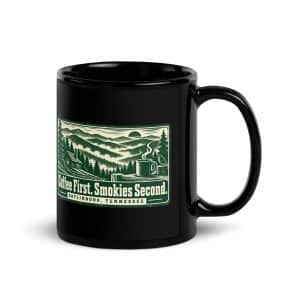 Gatlinburg and the Smokies Black Coffee Mug: Coffee First. Smokies Second, Forest Ink Stamp Price range: $20.95 through $23.95See it →
 Gatlinburg and the Smokies Vinyl Sticker: Mountain Mornings. Cabin Evenings, Forest Ink Stamp Price range: $14.95 through $22.95See it →
Bear-aware habits at the cabin
Black bears live around Gatlinburg as well as in the park, and they have an excellent sense of smell. The park says it’s about seven times stronger than a bloodhound’s. The City of Gatlinburg requires animal-resistant garbage containers across a large part of town, including properties with a Tourist Residency Permit, and fines unsecured trash. In practice, that means:
- Follow your cabin’s trash instructions exactly, and latch the bear-resistant bin every time
- Never leave food, coolers or grocery bags on the porch or deck, or in the bed of a truck
- Clean the grill after you use it
- Keep car doors locked and food out of sight
If you see a bear, enjoy it from a distance and let it go about its business.
Car and comfort
- A phone mount and a car charger. Mountain roads aren’t the place to hold your phone
- Your cabin’s written directions, saved offline. GPS can struggle on back roads
- A small flashlight for the walk from the car to the door
- Board games or cards, because not every cabin’s Wi-Fi is strong enough for streaming
- A candle or two for the evening, if the rental allows it
- A blanket for the porch
What about firewood?
If your cabin has a fireplace or fire pit, ask the host what to use. Many supply wood or tell you where to buy it nearby. If you’re also camping or having a fire inside the national park, the rules there are strict. Only heat-treated firewood that is bundled and certified by the USDA or a state agency may be brought in. The park also allows dead and down wood collected in the park, as the park’s firewood FAQ explains.
If the dog is coming
Most trails in the park don’t allow pets. Leashed dogs are welcome in campgrounds, in picnic areas and along roads, and on only two trails: the Gatlinburg Trail and the Oconaluftee River Trail. Pack a 6-foot leash (the park’s maximum), waste bags, a water bowl and a towel for muddy paws. Check your cabin’s pet policy before booking.
The quick checklist
- Layers, a rain jacket, a warm hat
- Hiking shoes plus a spare pair
- A printed parking tag
- A day pack with the ten essentials and plenty of water
- A paper map and offline maps
- A headlamp
- Binoculars
- Your coffee setup and favorite mugs
- First-night groceries
- Chargers and a car mount
- Games, a blanket, a hot tub swimsuit
Going in autumn? Pair this list with our guide to things to do in Gatlinburg in the fall. And if you’re the one who always ends up making the morning coffee, our camp coffee guide works just as well on a cabin porch.
 Gatlinburg and the Smokies Enamel Camp Mug: Gatlinburg. Less Hurry, More Mountain, Woodland Scenic Lettering$32.95See it →
 Gatlinburg and the Smokies Vinyl Sticker: My Vacation Has a Mountain Backdrop, Scenic Shield Badge Price range: $14.95 through $22.95See it →
 Nature and Adventure Black Coffee Mug: My Kind of Nightlife Has a Campfire, Woodland Scenic Lettering Price range: $20.95 through $23.95See it →
Questions people ask
What should I wear in Gatlinburg in October?
Wear layers. The park describes fall as warm days and cool nights, with first frosts often in late September. Higher elevations can be 10 to 20 degrees cooler than town, so bring a fleece and a rain jacket even if the forecast for town looks mild.
Do I need a parking pass for the Smokies?
Yes, if you park for more than 15 minutes anywhere in the park. Tags cost $5 a day, $15 a week or $40 a year. They’re tied to one license plate and have to be printed and displayed, because digital copies aren’t accepted.
Do Gatlinburg cabins supply towels, linens and kitchen basics?
It depends on the rental, so read your listing or ask the host. Many provide linens and basic cookware, but don’t count on coffee filters, spices or a decent knife.
Is there cell service in the Smoky Mountains?
Inside the park, the park service describes it as extremely limited. Download maps and directions before you leave, and carry a paper map on any hike.
How do I keep bears away from my cabin?
Don’t give them a reason to visit. Use the bear-resistant trash container properly, keep food and coolers indoors, clean the grill, and never feed wildlife.
More in Gatlinburg and the Smokies.